

Thank you for Subscribing to Electrical Business Review Weekly Brief

Danfoss Drives
Janne Kuivalainen, CTO & Head of Technology
Rethinking Industrial Security and Functional Safety in the New Normal
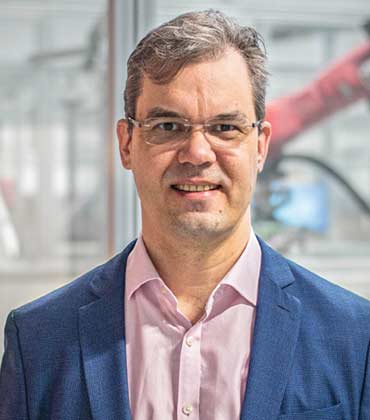
Janne Kuivalainen
Business requirements seem to be increasing all the time. Things must be digital, more data must be available, compliance is an increasingly multidimensional field and sustainability sets new requirements. But is it so? The matter can also be viewed from the opposite angle that new ways of acting can change operations in a fundamental way, thus achieving an increase in both productivity and efficiency.
Let me take an example from the frequency converter business: Frequency converters are used to control the speed and torque of electric motors. They also have numerous applications in electrification. With frequency converters considerable cost savings, productivity improvement, and reduction of C02 emissions are achieved when comparing to motors connected directly to the electrical grid. Nevertheless, only about 20% of electric motors are equipped with frequency converters. These issues are also relevant to many other industrial control devices, components and systems – how widely are the best practices applied? And what role do digitalization and sustainability play in this and how do they relate to each other in the case of industrial control device asset optimization? Asset optimization – performance by simulation and modelling: Practically all new products are currently engineered using simulation and modeling tools. The digital twin is becoming de facto. However, the benefits of these models have been limited to the manufacturers’ own activities, but this is now -changing. There are models on the market that enable interoperability between different models and modeling environments. Use cases vary and so do the benefits and approaches. In system projects, it is important to verify the configuration, in which case the models must support the level of the system’s operation and the effective parameterization. This enables virtual factory acceptance tests and commissioning simulation. The benefits are obvious in terms of time savings, cost of test arrangements, and the verification of the actual operation of the system before the physical implementation. Commissioning can take up to 25% of the project time, and most delays occur during this project phase. The requirements of an OEM machine builder doing product development can be very demanding. In addition to the above, the simulation requirements of the system are also related to optimizing the performance of the devices. Highfidelity models enable assessing the overall performance of the whole system before using physical components, allowing simulation of diverse configurations, testing safety critical functionalities, avoiding unnecessary stress to the equipment, increased test coverage - and by cutting development, test time and cost at the same time. And use cases can also cover parts of the product certification and product validation. Asset optimization – selection for the best use of CAPEX and OPEX: Digitalization has also affected B2B purchasing behavior. Digital product information makes it possible to not only compare products but also optimize the selection. For example, when the data produced by the simulations is used to determine the performance and load profiles of the devices, in addition to other environmental variables, the selection of the devices can be made more precisely than before. Electricity consumption and the optimization of electrical energy losses are closely related to this multivariable optimization. The information provided by the simulations about the required operating points for the devices can be used to optimize the energy efficiency ratio. The same applies to non-linear loads, like variable frequency converters or rectifiers, in electric networks, where simulating the harmonic distortion caused by them both at the device and system level is important to control the topic and to optimize the energy efficiency. The final choice is the best business case and ROI when optimizing CAPEX and OPEX.If we put the customer at the center of everything we do, we ensure we develop relevant and value-adding products.
The articles from these contributors are based on their personal expertise and viewpoints, and do not necessarily reflect the opinions of their employers or affiliated organizations.
