


Thank you for Subscribing to Electrical Business Review Weekly Brief
Electrical Business Review: Specials Magazine
Lighting systems in healthcare, infrastructure and industrial environments are expected to operate continuously, with limited tolerance for failure or disruption. Maintenance access, compliance requirements and long service intervals place pressure on how systems are designed, shifting the focus toward durability and predictable performance over time. FW Thorpe Plc develops lighting systems within these constraints, focusing on applications where reliability over extended service periods is a primary requirement. The company designs, manufactures and supplies professional lighting systems aligned with environments where performance consistency carries direct operational implications. Its portfolio supports the healthcare, education, infrastructure and industrial facilities sectors. Each setting introduces defined requirements related to compliance, usage intensity and environmental exposure, shaping how systems are configured and delivered. Installations often operate across extended hours, requiring stable output aligned with energy targets. Healthcare environments require lighting to support clinical workflows, where consistent illumination contributes to safety and accuracy. Infrastructure installations operate across extended cycles with minimal intervention, requiring systems configured for durability. Industrial facilities introduce exposure to dust, vibration and temperature variation, influencing how products are engineered for sustained use.

Top Electrical and Thermohydraulic Distribution Consortium System In Europe 2026
What role does a consortium model play in supporting independent electrical distributors nationally? Elex Italia represents a consortium model within Italy’s electrical distribution network, bringing together independent electrical and thermohydraulic distributors within an organized national structure. A formally defined governance model provides member companies a framework for coordination and strategic direction, without dissolving their entrepreneurial independence. Currently, the consortium connects 11 family-owned distributors operating 426 branches throughout Italy. Each company retains its own management structure and commercial operations, which allows them to maintain operational flexibility and remain responsive to regional market needs. At the same time, participation in the consortium enables them to strengthen their position in supplier negotiations, partake in joint commercial initiatives, and exchange sector insights. Within this structure, the consortium functions as a service platform rather than a traditional distributor. It does not directly handle procurement or end-customer relationships. Instead, it provides a range of integrated digital and operational support systems that allow member distributors to leverage collective capabilities while maintaining independent operations. “Our strength lies in combining strong territorial presence, strategic coordination, and digital acceleration within a single model,” says Michele Aloise, general manager. A Governance Structure Supporting Independent Distributors How does Elex Italia’s governance structure balance coordination with operational independence among members? Elex Italia’s governance model supports coordination among its member distributors. Strategic oversight is provided by the Shareholders’ Assembly together with the Board of Directors and the Board of Statutory Auditors. These bodies operate alongside a central team that brings sector-specific expertise in electrical distribution. This structure defines the consortium’s collective initiatives and leaves operational decisions with the individual distributors. For member companies, the structure creates several advantages. Economically, negotiated target-based agreements and coordinated group promotions strengthen commercial conditions and purchasing power. Collective engagement with suppliers also supports stable supplier partnerships and consistent product availability across the network.

CXO INSIGHTS

The future of Electric Utilities
Roderick Conwell, Director, Transmission & Distribution Engineering, the AES Corporation

Driving Customer-Centric Innovation in the Data Center Industry
Jorge Quintana, Head of Sales North America, Anord Mardix

A Call for Transmission Innovation and Grid Enhancing Technologies (GETs)
Rodica Donaldson, Vice President Transmission Analytics & Interconnection, EDF Power Solutions North America

Building The Nation's Power Systems
Timothy Sellers, Site Safety Director, Alberici Constructors

Building Equitable Pathways in Western Energy
Pamela Sporborg, Senior Director, Transmisson & Market Strategy, Portland General Electric
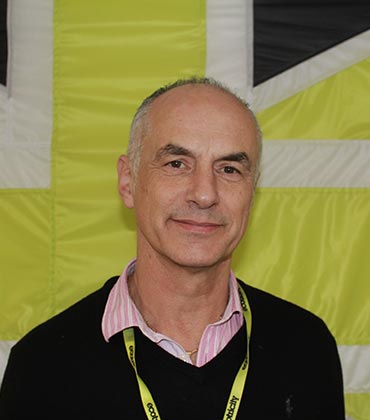
Building VPPS: From Reactive Services to Strategic Foresight
Mark Meyrick, General Manager Ecotricity Smart Grid Limited, Ecotricity

Supporting the Acceleration to an Electric Future
Ankit Pandey, Global Product Lead - Consumer Tyres, Apollo Tyres Ltd

IN FOCUS

Sustainable Electrical Design: Europe's Path Toward Eco-Friendly Infrastructure
Sustainable electrical engineering enables efficient energy systems, smart grids and eco-conscious infrastructure through innovation, integration and responsible design practices.
Strengthening Energy Governance: The Role of Consortium Systems in Europe
Electrical and thermohydraulic consortium systems integrate power and thermal networks, enhance reliability, support renewable integration, and strengthen coordinated energy governance.
EDITORIAL
Structuring the Future of Electrical Distribution
The electrical distribution and utility sector is becoming more complex and interconnected, changing how systems are built and managed. As energy demand and regulatory requirements grow, the focus is shifting to coordinated, system-wide approaches. This edition examines how networks are evolving through collaboration, digital integration and long-term infrastructure planning.
Elex Italia, recognised as the Top Electrical and Thermohydraulic Distribution Consortium System in Europe 2026, operates as a national consortium of 11 independent distributors across 426 branches. Its governed structure supports aligned supplier engagement, shared digital infrastructure and data-driven planning without centralising operations. Through its Digital Accelerator Programme and E-ducation platform, it builds technical capability and market responsiveness while retaining regional agility, functioning as a service platform for long-term competitiveness.
Across the industry, a clear shift toward operational discipline and coordinated execution is underway. Contributors in this edition outline how utilities and market participants are aligning infrastructure investment, governance and digital capabilities to manage large-scale transition. These changes reflect structured responses to evolving grid demands, customer expectations and regulatory requirements.
From a leadership perspective, Roderick Conwell, Senior Director, Transmisson & Market Strategy at The AES Corporation, underscores the accelerating digital transformation of utilities, from self-healing grids to predictive infrastructure monitoring, alongside the pressing need for workforce renewal and safety-centric operations. Complementing this, Pamela Sporborg, Senior Director, Transmisson & Market Strategy at Portland General Electric, emphasises governance reform and interregional transmission partnerships as critical to ensuring affordability, reliability and decarbonisation, while highlighting the growing role of virtual power systems in optimising distributed energy resources.
Overall, this edition shows that progress in the electrical sector is driven more by coordinated execution than by isolated innovation. We invite you to explore these perspectives and engage with the strategies shaping the next phase of industry development.
